
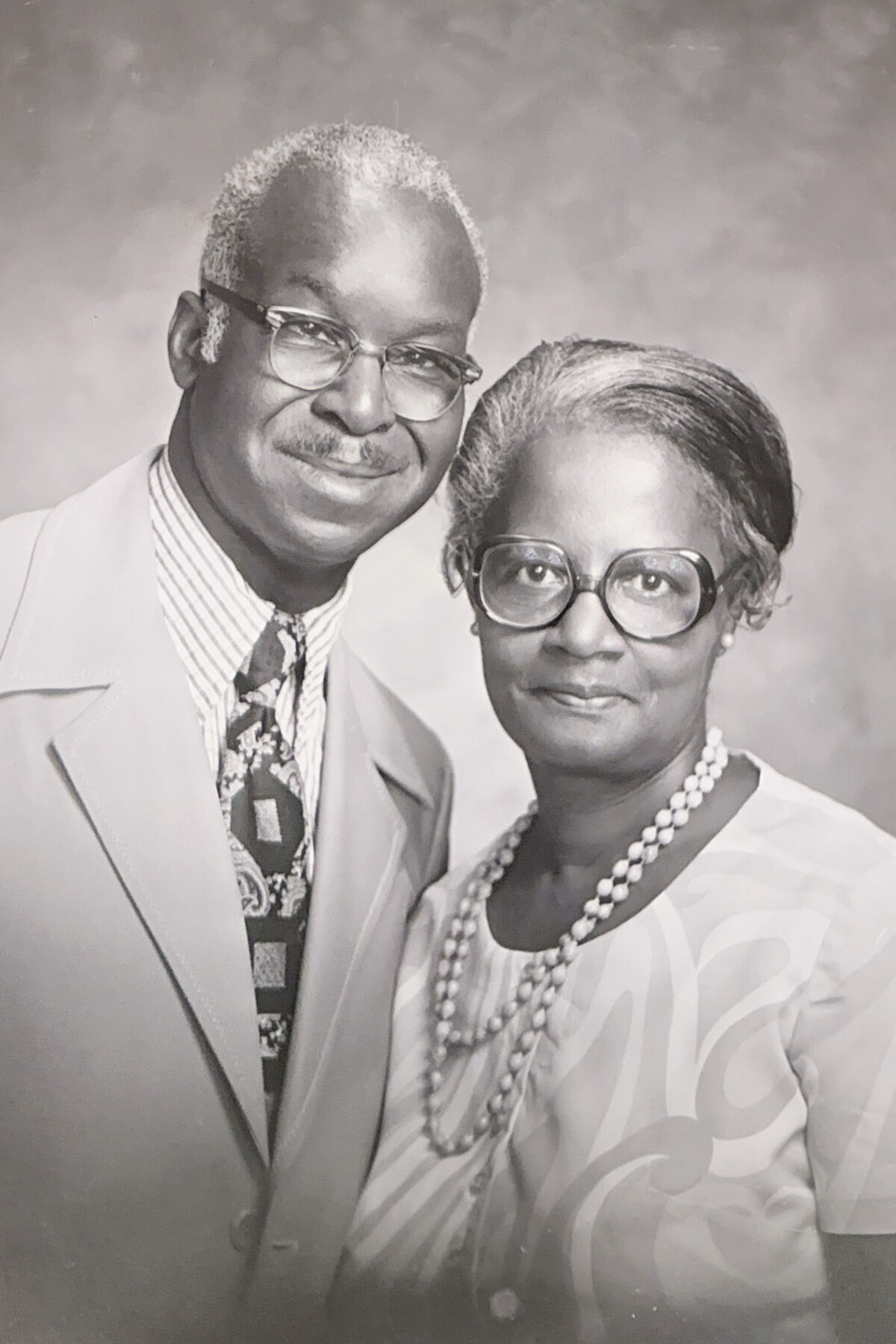
Florence Madison
From Greenville, Alabama to Youngstown, Ohio — a life remembered
Interviewee: Florence Madison | Interviewer: Joseph Drobney, Youngstown State University
Date: October 16, 1985 | Location: 2634 Stocker Avenue, Youngstown, OH
Program: YSU Oral History Program — Westlake Terrace Project (O.H. 702)
Subject: Lives of Black Americans, rural conditions, segregation, and life in Youngstown
Florence Madison was born on August 11, 1916, in Greenville, Alabama, the ninth of ten children born to James and Alice Hilson. She was eight years old when her father brought the family north to Youngstown, Ohio — part of the Great Migration that reshaped American cities in the years following World War I. She would spend the rest of her life there, raising four children alongside her husband Ralph, serving her community in countless ways, and living through some of the most dramatic decades of twentieth-century American life.
In October 1985, she sat down with historian Joseph Drobney at her home on Stocker Avenue to share her story for the Youngstown State University Oral History Program. What follows is a narrative drawn from that conversation.
Leaving the South
Florence grew up on a farm in rural Alabama where education for Black children was scarce and often interrupted. Public schools as Northerners understood them simply did not exist for Black children in the South — there were one-room schoolhouses with few books, taught by dedicated Black women paid only what parents could afford. Children old enough to work in the fields often missed whatever sessions the school held.
Her father’s brother had come to Youngstown years earlier and wrote back about the opportunities there — mill work was plentiful, schools were better, and life held more promise. When Florence was eight, her father, James, made the decision to go. He came first, followed by two of Florence’s brothers who went to work in the mills. Then, in October 1924, Florence arrived by train with her mother and the remaining children, changing trains in Cincinnati.
“I remember the fireplace. The house attracted me. It was so nice. I think they had paved streets. When you are living on a farm, you don’t know what paved streets are like.”
— Florence Madison, on a stopover during the journey north
The family arrived in Youngstown on October 24th, at night, riding the streetcar from Pennsylvania Station on Spring Common. They missed their stop on Fleming Street, getting off instead at Jefferson Street, and Florence shivered all the way home — her coat had been mail-ordered and hadn’t arrived in time, so her mother had bought her a bulky sweater in Cincinnati. It was the first cold night of a new life.
Growing Up in Youngstown
Florence began school at Jefferson Elementary at the age of eight — starting in kindergarten despite being years older than her classmates, but quickly skipping grades thanks to older siblings who had taught her at home. She completed twelve years of schooling in ten and a half, graduating from Rayen High School in June 1935. She would later attend Youngstown State University part-time from 1968 to 1978.
She loved school deeply. “I loved it,” she recalled simply. “It was a challenge to me. I just loved learning.” Jefferson Elementary was run with a firm but kind hand by Miss Margaret McNabb, the first woman principal in Youngstown. Florence remembered her with admiration: the school was quiet, orderly, and her brother Raymond’s eighth-grade graduation was a proud family milestone — the first in their family to reach that level.
To help the family financially, Florence and her younger sister Cora delivered newspapers for the Youngstown Telegram. Florence’s route took her up Fleming, across Coral, up Jefferson, back down Worthington, and through a sprawling web of streets — all on foot, every afternoon, at around thirteen years old. She earned 18 cents a week per customer and calculated her commissions with careful arithmetic. “It was safer in those days,” she noted with a wry smile. “You didn’t have the problems then that you have now.”
Downtown Youngstown in the 1920s and ’30s was a bustling place — bright lights in the evening, store windows always beautifully decorated, sidewalks so crowded you could scarcely walk. The family rarely took the trolley, at a cost of 8 or 10 cents, because her mother couldn’t afford fares for five children. They walked. Everyone walked.
The Depression Years
When the Depression struck in 1929, Florence’s father — who had been working at Republic Steel Mill — was laid off, as was much of the city. But the Hilson family fared better than many. Florence’s mother was a matriarch in the old sense: any money earned came into her hands first. With brothers in and out of work at the mills, at bakeries, and briefly in the West Virginia coal mines, there was almost always something coming in. Her brother Jasper worked at what the family called the House of Hathaway bakery on Hubbard Road, and day-old bread, rolls, and baked goods found their way home in abundance. Neighbors envied the family their large number of earners.
Florence’s mother also kept a garden in the backyard, and neighbors shared surplus vegetables with one another freely. “In those days neighbors helped each other,” Florence remembered. “If they had something extra, they would share it with you.”
Marriage and the Westlake Terrace Years
Florence married Ralph Madison in 1938. Housing in Youngstown was extremely scarce, and the young couple’s first years together were spent moving from rented rooms to borrowed spaces. When Ralph couldn’t keep a job at Hathaway Bakery — the baker’s union would not admit Black workers — they moved in with his mother on Earle Avenue. Florence was working for her uncle’s Spring Common Transfer and Storage Company on Federal Street, answering phones and keeping the office.
In June 1940, they moved into the brand-new Westlake Terrace Housing Project, apartment 130 at 850 West Federal Court, with their baby and a few pieces of furniture. The rent was $18.75 a month — one-quarter of their combined income, as the rules required. Florence was thrilled. After years of moving from place to place, it felt like a home of their own.
“The project was nice in those days. Everybody was so proud. The apartments were clean; they got new furniture, new curtains. Everything was brand new; everybody was glad enough to have a place.”
— Florence Madison
They lived at Westlake for thirteen years, eventually moving to a larger two-bedroom apartment after their second child was born. Florence observed and participated in the life of the project closely — the laundry room schedules, the assigned grass-cutting weeks, the tenant council meetings, the inspections by project manager Paul Strait who would walk through the grounds talking with residents. She noted early on that the project was racially divided: the section south of Madison Avenue was assigned to Black families, north was white. “The children called it the ‘white project’ and the ‘colored project,'” she said. “We noticed it, but the ‘powers that be’ had established that. What could you do?”
By 1952 and 1953, the character of the project had begun to change — more conflict between families, less care for the shared spaces, the original pride slowly fading. Florence and Ralph had already purchased a lot on Stocker Avenue. In June 1953 they moved out, staying with family until the house was ready. Florence summed up her thirteen years there with characteristic directness: “I was very glad to move in, but by 1953 I was even more glad to move out.”
A Life of Service
Throughout her years in Youngstown, Florence was deeply involved in her community — as a PTA member, Sunday school teacher, member of the North High School Band Boosters, and active participant in the NAACP. She worked for the Youngstown city school system, carrying forward the love of learning that had been kindled in her as a young girl on Fleming Street.
When Joseph Drobney thanked her at the close of their interview, Florence had given him nearly two hours of vivid, precise memory — a woman who had watched Youngstown transform over six decades, who had lived through the Great Migration, the Depression, World War II, and the slow decline of the steel economy, and who remembered all of it with clarity, warmth, and an eye for telling detail.
Also in this series: Ralph Madison — Steelworker, deputy, father — Youngstown born and bred