

Almost Artemis 2 day.

This post was AI generated and is a test to see how well it did. I need an editor.


Alright folks, buckle up, because another monumental mission is on the horizon! Artemis 2 is gearing up, and while my heart is absolutely soaring with excitement, my boots are staying firmly on the ground… or rather, in my living room. Yep, I’ll be watching this historic flight from the comfort of my couch, and let me tell you why.

Recalling Artemis 1: The Scrubber’s Tale

You remember Artemis 1, right? The uncrewed test flight that kicked off NASA’s ambitious return to the Moon? Well, I was there. Not just *there* in spirit, but physically *there*, amidst the thousands of fellow space enthusiasts, RVs, and buzzing excitement in Titusville, Florida. The energy was palpable, a mix of childlike wonder and serious anticipation for humanity’s next giant leap.

Editor’s Note: I was actually at the Space Center and not at Titusville with RVs and crowds. 

I was there for the first two scrubbed attempts. Oh, the drama! The first one, back in August 2022, was called off due to an issue with one of the RS-25 engines not chilling down properly, along with a suspected hydrogen leak. We waited, we hoped, we ate overpriced hot dogs. Then, the second attempt in early September. This one was a bit more dramatic – a significant liquid hydrogen leak during fueling of the core stage. You could feel the collective sigh of disappointment ripple through the crowds as the launch window slipped away.

It was a proper rollercoaster of emotions. The sheer scale of the SLS rocket, even on the pad, is awe-inspiring. It looks like a skyscraper ready to punch a hole in the sky. To be so close, to feel the vibrations of the countdown, to smell the rocket fuel… it’s an experience unlike any other. Unfortunately, I had to head home after that second scrub. So, when Artemis 1 finally *did* launch a couple of months later, I was watching from afar, filled with a bittersweet mix of pride and FOMO. Man, I wish I had been there for that actual launch!

Artemis 2: What’s the Big Deal?

Now, here we are, on the cusp of Artemis 2. And this one? This is a whole different beast. Artemis 2 isn’t just another test; it’s the first crewed mission of the Artemis program. This means real, live astronauts will be making the journey around the Moon and back! It’s essentially a dress rehearsal for Artemis 3, which aims to put humans back on the lunar surface.

The crew for Artemis 2 is phenomenal, a true testament to international collaboration and diversity:

  • Reid Wiseman (NASA) – Commander
  • Victor Glover (NASA) – Pilot (the first person of color to journey to the Moon)
  • Christina Koch (NASA) – Mission Specialist 1 (the first woman to journey to the Moon)
  • Jeremy Hansen (CSA) – Mission Specialist 2 (the first Canadian to journey to the Moon)

These four incredible individuals will spend about 10 days aboard the Orion spacecraft, orbiting the Moon and testing all the critical systems – life support, communications, navigation, and re-entry procedures – before future missions attempt a lunar landing. It’s a monumental step towards establishing a long-term human presence on and around the Moon, and eventually, sending humans to Mars.

Why I’m Staying Home (It’s Complicated)

So, given all that excitement, why am I opting for a remote viewing experience? Well, my friends, it comes down to those pesky, *leaky hydrogen valves*. Remember those issues from Artemis 1? The engine bleed problems, the significant hydrogen leaks? They’ve left me a little… wary.

While I have immense respect for the engineers and scientists who work tirelessly to make these missions safe, the thought of being stuck in traffic for hours, battling mosquitoes, and enduring long waits, only for another scrub due to a hydrogen leak, is less appealing this time around. It’s a personal decision, a balance between the thrill of being there and the comfort of knowing I won’t be caught in a potentially frustrating situation.

Plus, let’s be honest, watching from home offers some serious perks:

  • No traffic jams (the causeway after a scrub is brutal!).
  • Unlimited snacks and drinks.
  • The best seat in the house, with multiple camera angles and expert commentary, all in glorious HD.
  • No sunburn!

It’s not a lack of enthusiasm; it’s just a practical choice born from past experiences. I trust the incredibly smart people at NASA and their partners to ensure the crew’s safety, but I also trust my gut when it says, “Maybe just watch this one from the sofa.”

The Future is Lunar

Despite my remote viewing plan, my excitement for Artemis 2 is through the roof. This mission is a crucial stepping stone. It brings us closer to Artemis 3, which will finally put boots back on the lunar surface, including the first woman and first person of color to walk on the Moon. And beyond that? A sustained lunar presence, the Gateway space station, and eventually, human missions to Mars.

We are living in an incredible era of space exploration, and I feel incredibly lucky to witness it. So, as Artemis 2 prepares for its historic journey, I’ll be cheering loudly from my living room, probably with a cup of coffee in hand, marveling at the courage of the crew and the ingenuity of humanity.

Go Artemis! Go Orion! Go SLS! And most importantly, go crew!
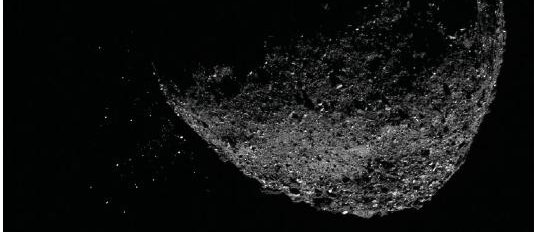
5 Asteroids Making Close Approaches to Earth Right Now

Here’s a breakdown of the next five asteroid approaches, straight from NASA JPL’s Asteroid Watch Dashboard.

The Next Five Asteroid Approaches

01
2026 ET2
📅 March 16, 2026
📏 ~25 ft (Bus-sized)
📡 495,000 miles away
The smallest of the bunch, roughly the size of a city bus. At 495,000 miles out — about twice the distance to the Moon — it passed by with zero drama.
02
2026 EY2
📅 March 16, 2026
📏 ~35 ft (Bus-sized)
📡 986,000 miles away
Slightly larger than its same-day sibling, 2026 EY2 swung by at nearly four times the Earth-Moon distance. Completely harmless and barely the size of a large RV.
03
2026 CR3
📅 March 16, 2026
📏 ~230 ft (Airplane-sized)
📡 4,640,000 miles away
The largest of the five and the one worth watching. At 230 feet across it sits just under NASA’s “potentially hazardous object” threshold of ~490 feet. It passed comfortably at over 4.6 million miles — nearly 20 times the distance to the Moon.
04
2015 VO142
📅 March 17, 2026
📏 ~18 ft (Car-sized)
📡 649,000 miles away
A return visitor first catalogued over a decade ago. At just 18 feet across — roughly the length of an SUV — it would burn up entirely in the atmosphere long before reaching the surface.
05
2026 EZ2
📅 March 17, 2026
📏 ~160 ft (Airplane-sized)
📡 2,340,000 miles away
Rounding out the five, 2026 EZ2 is 160 feet across — about the length of a commercial aircraft fuselage — and sailed past at roughly 10 times the distance to the Moon.

How Many Asteroids Actually Hit Earth Last Year?

Probably more than you’d expect — but the answer depends a lot on what you mean by “hit.”

In 2025, NASA’s Center for Near Earth Object Studies (CNEOS) tracked 189 known asteroid close approaches that came within one lunar distance of Earth. But actual atmospheric entries are a different story: none of the objects that collided with Earth’s atmosphere in 2025 were discovered in advance. They were detected visually or captured by infrasound sensors — the same technology used to monitor nuclear detonations — after the fact. Every one of them was small enough to burn up harmlessly high in the sky.

The 2024 YR4 story: The headline-grabber of last year was asteroid 2024 YR4, which briefly alarmed astronomers after its discovery in December 2024. It was initially thought to have a notable chance of hitting Earth in 2032. Continued observations using NASA’s James Webb Space Telescope ultimately ruled out any impact risk — to Earth or the Moon.

Meanwhile, the broader catalog keeps growing fast: by November 2025, the number of known near-Earth asteroids surpassed 40,000, with roughly 10,000 of those discovered in just the last three years.

Should You Worry?

Short answer: no. The largest near-Earth objects — those capable of global-scale damage — have largely already been found and tracked. The ongoing work now focuses on the mid-sized population (100–300 meters across), which is harder to detect but well within the scope of current and upcoming survey technology, including the upcoming NASA NEO Surveyor mission planned for a 2027 launch.

The next time you see an asteroid headline, check the actual numbers. More often than not, “close approach” means millions of miles away — and that’s a very good thing.


Ignition: NASA Just Lit the Fuse for America’s Return to the Moon

March 24, 2026

After decades of dreaming, planning, and building, NASA has officially fired the starting gun. Today’s “Ignition: NASA’s Plan for Science and Discovery” press conference wasn’t just another agency briefing — it was a declaration of intent, a roadmap, and a promise all rolled into one.

The Mission: Back on the Lunar Surface by 2028

NASA laid out an accelerated Artemis architecture that should have every space fan’s heart racing. Here’s how it unfolds:

  • April 2026 — Artemis II: Four astronauts fly around the Moon for the first time since 1972. SLS and Orion are already at the Vehicle Assembly Building, prepped and nearly ready to go.
  • 2027 — Artemis III: A new mission added to the manifest. It includes rendezvous and docking with commercial landers (think SpaceX and Blue Origin), next-generation xEVA spacesuit testing, and full systems checkout in cislunar space.
  • 2028 — Artemis IV: Boots on the Moon. The first crewed lunar landing in over 50 years.
  • Beyond: At least one surface landing every single year thereafter — the beginning of a permanent human presence on the Moon.

Think Apollo Cadence, Not Apollo Era

NASA Administrator Jared Isaacman put it perfectly: “Standardizing vehicle configuration, increasing flight rate…is how we achieved the near-impossible in 1969 and it is how we will do it again.”

That philosophy — consistency, cadence, and ambition — is the spine of the whole plan. And there’s more: NASA is also pushing hard on space nuclear propulsion, laying the groundwork for the deep-space capabilities that will one day take us to Mars.

The Fuse Is Lit

This isn’t a vision statement. The rocket is built. The crew is training. The timeline is set. Whether you’ve been watching Artemis since day one or just tuning in, the next two years are going to be historic.

Strap in.

Fireball Over Ohio: Meteor Lights Up the Sky and Rattles Homes on St. Patrick’s Day

If you were anywhere near Northeast Ohio this morning and felt your house shake, you weren’t imagining things — a meteor streaked across the East Coast sky on St. Patrick’s Day, March 17, 2026, sending a thunderous sonic boom across Ohio, Pennsylvania, and beyond.

What Happened?

Around 9:00 a.m. EDT, a bright fireball blazed across the sky over the northeastern United States. Witnesses described it as a brilliant flash of yellow, bright orange, and red streaking overhead before it disappeared. Almost immediately, 911 lines in Northeast Ohio flooded with calls reporting what people described as an “earthquake-like” explosion — loud enough to knock picture frames and books off shelves in some homes.

The boom was heard and felt across three states — Ohio, Pennsylvania, and New York — and the fireball was spotted by observers as far away as Canada and Virginia.

Confirmed: It Was a Meteor

The National Weather Service (NWS) Cleveland office confirmed that the event was consistent with a meteor, citing imagery from NASA’s Geostationary Lightning Mapper (GLM). NOAA GLM data supported the conclusion that the massive sonic boom shaking Northeast Ohio was caused by a space rock entering Earth’s atmosphere at high speed.

One Strongsville resident reported that their entire house shook from the impact, with items falling off walls. Reports poured into the American Meteor Society from Indiana all the way to Virginia.

See It for Yourself

Incredible footage of the fireball is already circulating online. Check out this video capturing the moment it lit up the sky:

📹 Watch the meteor footage on Instagram

A Wild Way to Celebrate St. Patrick’s Day

While most people were celebrating the holiday with green beer and corned beef, the universe had its own fireworks show planned. Events like this are a reminder of just how dynamic and surprising our solar system can be — and how rarely we get a front-row seat to it.

Did you see or hear the meteor this morning? Drop a comment below — we’d love to hear your experience!