
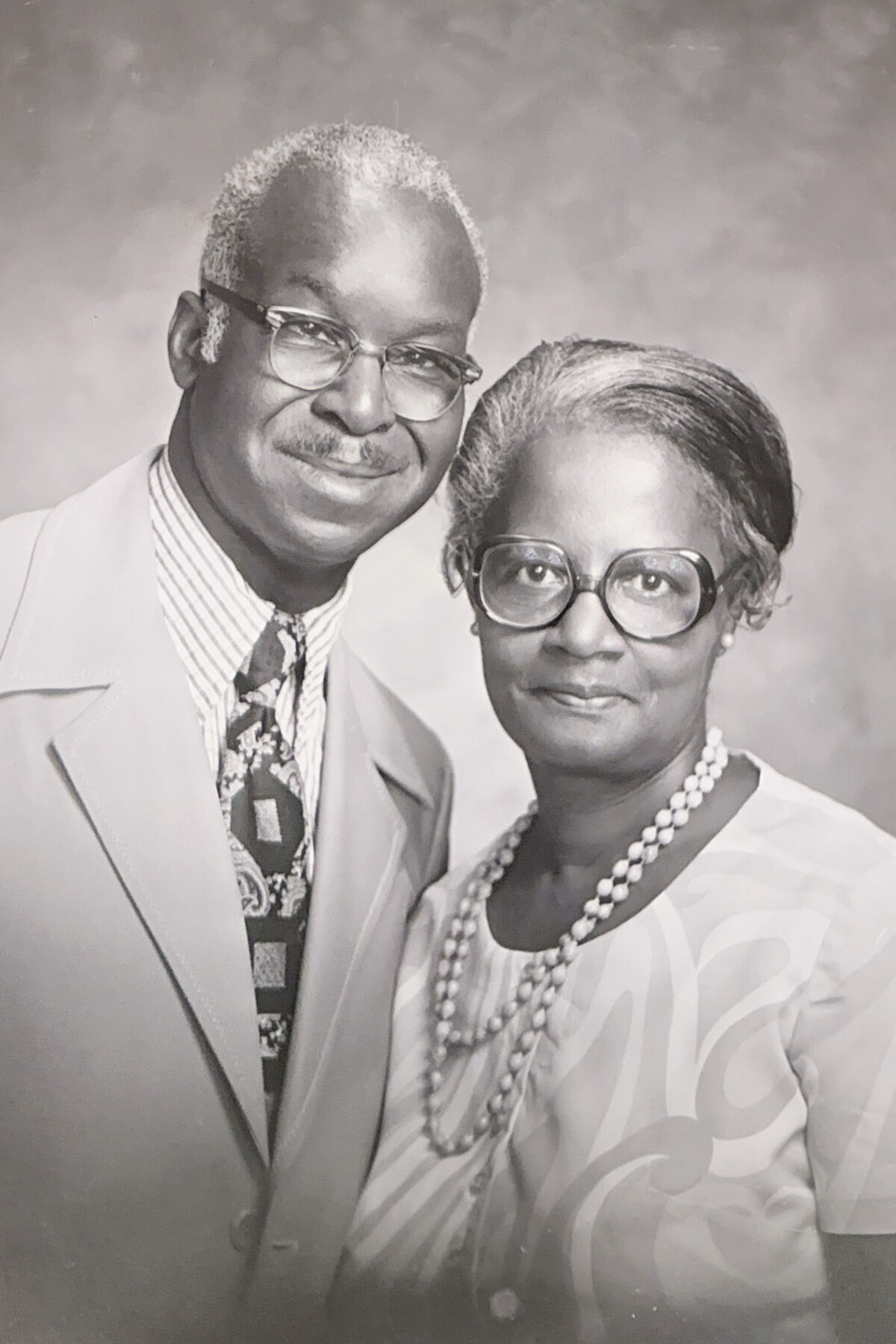
Oral History · Madison Family Archive

Oral History · Madison Family Archive

Ralph Madison

Steelworker, deputy, father — Youngstown born and bred

Ralph Madison — March 7, 1914 – November 17, 1985
This interview was recorded just 26 days before his passing.

Interviewee: Ralph Madison  |  Interviewer: Joseph Drobney, Youngstown State University

Date: October 22, 1985  |  Location: 2634 Stocker Avenue, Youngstown, OH

Program: YSU Oral History Program — Westlake Terrace Project (O.H. 770)

Subject: Resident conditions, Civilian Conservation Corps, life in Youngstown

🎙 Original Recording — Side A
Ralph Madison — Oral History Interview
Recorded October 22, 1985 · Youngstown State University Oral History Program

🎙 Original Recording — Side B
Ralph Madison — Oral History Interview (continued)
Recorded October 22, 1985 · Youngstown State University Oral History Program

Ralph Madison was born on March 7, 1914, on the south side of Youngstown, Ohio — the second-oldest boy among eight children born to Isaac and Ida Madison. He grew up in a working-class neighborhood on Earle Avenue, delivered newspapers, watched his city transform through the Depression and two World Wars, spent 36 years working for U.S. Steel Corporation, served as a Mahoning County Sheriff’s Deputy for eleven years, and raised four children with his wife Florence in the Westlake Terrace Housing Project.

On October 22, 1985, he sat down with historian Joseph Drobney at the family home on Stocker Avenue for what would be one of the last long conversations of his life. He died 26 days later, on November 17, 1985. His interviewer, Drobney, noted afterward that Ralph was “an articulate, easy to talk to individual who made this interviewer’s job truly a pleasure.” What follows is a narrative drawn from that recorded conversation.

Growing Up on the South Side

Ralph’s earliest memories were of the south side of Youngstown — a mixed neighborhood where steelworkers, streetcar conductors, and tradespeople of many ethnic backgrounds lived side by side on Earle Avenue. His father, Isaac, had come to Youngstown from Pennsylvania, where he had worked as a bricklayer. When he arrived at what was then Carnegie Steel (later U.S. Steel), he was told he’d be placed in the brickmason department — but not as a bricklayer. Isaac pushed back, and eventually prevailed: he became the only Black bricklayer at the plant for years. He also spoke Italian, Slovak, and Croatian fluently, which made him invaluable at safety meetings where immigrant workers couldn’t understand English instructions. “People would be surprised,” Ralph recalled. “They would say that he spoke their language better than they did. Everyone knew Isaac because of that.”

Ralph attended Delason Grade School and Princeton Junior High before finishing at South High School in 1933. He was one of just six Black students in a graduating class of over 200. He delivered the Vindicator newspaper on his way home from school each day, picking up his papers near the school and walking his route back to Earle Avenue. He liked school — liked his teachers, liked being close to home — and would have stayed longer if circumstances had allowed.

Segregation in Plain Sight

Youngstown in the 1920s and ’30s was a city alive with activity — but it enforced its racial boundaries quietly and thoroughly. Downtown theaters admitted Black patrons but sold them tickets only for the balcony or the rear. “You knew just where you would go to sit,” Ralph recalled. “They didn’t say it. They only sold you tickets to certain places.” The Palace Theater, the Strand, and the Park Theater all operated this way. Certain restaurants would not serve Black customers at all.

“There were certain places that you didn’t go, and there were a lot of places that you could go. In some theaters and restaurants you didn’t go in.”
— Ralph Madison

Black Youngstownians had their own spaces — all-Black venues, certain beer gardens — but the broader civic life of the city was divided in ways that went largely unspoken and largely uncontested, because challenging them carried real risk.

The Depression and the CCC

When Ralph graduated high school in 1933, the Depression was still grinding on. His father was laid off intermittently — sometimes working a day or two on a pay, sometimes nothing. The family relied on soup kitchens that operated along the Sharon Line streetcar route. Ralph remembered pulling a child’s wagon to the distribution point to collect food commodities — flour, grapefruit, whatever was being given out that week.

Shortly after graduation, a classmate told Ralph about the Civilian Conservation Corps and asked if he wanted to sign up. He said yes. The next Monday they went down; Wednesday they left. Ralph spent a year and a half in the CCC — driving trucks and doing manual labor — before deciding he’d had enough. His father told him the mill was no place for a young man, but Ralph wanted steady money. He started at U.S. Steel’s Ohio Works in 1936 as a general laborer, making $3.76 a day for ten-hour shifts, six days a week, with no overtime, no union, and no benefits to speak of.

Inside the Mill

The conditions Ralph described in the mill were brutal by any measure. Workers entered open-hearth furnaces — massive structures heated to extreme temperatures — and dismantled them by hand with bars and shovels, throwing bricks while wearing only hand pads. The bricks were hot enough to burn through shoes. “Sometimes the shoes were burnt anyway when you came out,” he said matter-of-factly. If you got hurt, you were sent to a hospital — but there was no real safety infrastructure, and getting hurt might mean losing your job.

Foremen actively discouraged talk about unionizing, threatening workers with termination if they showed interest. When organizers finally began appearing at the plant gates in the late 1930s, things were tense. The big 1937 strike — which brought National Guard troops marching through Brier Hill and around Sheet & Tube — touched Ralph’s life at a distance; he’d already been laid off and watched soldiers patrolling the streets as a bystander. When the union finally came to Ohio Works around 1940, wages jumped from roughly $3 a day to $5, and the eight-hour workday arrived. “Things did get better, definitely,” Ralph said.

Marriage and Westlake Terrace

Ralph married Florence in 1938. The newlyweds rented a room on Harlem Street, then an apartment on Griffith Street across from where the Westlake Terrace project would be built. When construction began, Ralph watched from across the street as the old Morrison Hill neighborhood — houses called “shotgun houses” because you could see straight through them — was torn down and the new project rose in its place.

They moved into Westlake on June 26, 1940, with a young baby and furniture scrounged from Florence’s uncle’s moving company. The apartment came with a refrigerator and a stove — they brought everything else. Ralph had to present his marriage license, utility bills, and proof of employment at the office on West Federal Street to qualify. Rent was set at one-quarter of monthly income, starting around $18.75 a month.

“It was a good place to live. It was a first permanent home for you and your wife.”
“Right, and I never regret it.”
— Exchange between interviewer Joseph Drobney and Ralph Madison, at the close of the interview

Ralph served as a tenant council representative for his four-building section of the project, holding a key to the laundry room and meeting regularly with Youngstown Metropolitan Housing Authority officials — including Paul Strait, the YMHA director who made a habit of walking through the project and talking with residents. Ralph had a civic instincts and a quiet authority; he was the kind of person institutions trusted with responsibility.

War Years and After

When World War II came, the mill got Ralph a deferment because he ran certain specialized machinery. U.S. Steel shifted entirely to war production — steel going directly into materiel. Wages were frozen by wartime government policy; the union cooperated. Women came into the mill in significant numbers for the first time, running cranes, unloading boxcars, digging ditches alongside men. Some stayed after the war; most who had taken the heavier jobs left.

By the late 1940s and early 1950s, Ralph noticed the project changing. The original residents — young couples who had moved in around 1940 and 1941 and built their stability there — were beginning to leave as soon as they could buy or rent something better. Ralph worked two jobs to save enough to get out. He and Florence eventually moved to the lot they’d bought on Stocker Avenue, leaving Westlake in 1953.

After 36 years at U.S. Steel, Ralph went on to work at Bliss Manufacturing from 1972 to 1974, and then spent eleven years as a Mahoning County Sheriff’s Deputy. He was still living on Stocker Avenue — the address to which YSU mailed the transcript of his interview — when he died on November 17, 1985.

A Voice Preserved

Ralph Madison’s interview with Joseph Drobney runs to 27 typed pages of careful, specific memory. He remembered prices — the 8 or 10 cent trolley fare, the $3.76 daily wage, the $18.75 rent — with the precision of a man who had lived close enough to the financial edge that numbers mattered. He remembered names, streets, the layout of neighborhoods long since demolished. He spoke without bitterness about the segregation he had navigated his entire life, and with genuine warmth about the community that had formed in Westlake Terrace during its early years.

The recording of his voice — digitized from the original tape — is embedded above. Listen to him speak in his own words, on one of the last mornings he had to give.

Also in this series: Florence Madison — From Greenville, Alabama to Youngstown, Ohio

Oral History · Madison Family Archive

Oral History · Madison Family Archive

Florence Madison

From Greenville, Alabama to Youngstown, Ohio — a life remembered
Interviewee: Florence Madison  |  Interviewer: Joseph Drobney, Youngstown State University

Date: October 16, 1985  |  Location: 2634 Stocker Avenue, Youngstown, OH

Program: YSU Oral History Program — Westlake Terrace Project (O.H. 702)

Subject: Lives of Black Americans, rural conditions, segregation, and life in Youngstown

Florence Madison was born on August 11, 1916, in Greenville, Alabama, the ninth of ten children born to James and Alice Hilson. She was eight years old when her father brought the family north to Youngstown, Ohio — part of the Great Migration that reshaped American cities in the years following World War I. She would spend the rest of her life there, raising four children alongside her husband Ralph, serving her community in countless ways, and living through some of the most dramatic decades of twentieth-century American life.

In October 1985, she sat down with historian Joseph Drobney at her home on Stocker Avenue to share her story for the Youngstown State University Oral History Program. What follows is a narrative drawn from that conversation.

Leaving the South

Florence grew up on a farm in rural Alabama where education for Black children was scarce and often interrupted. Public schools as Northerners understood them simply did not exist for Black children in the South — there were one-room schoolhouses with few books, taught by dedicated Black women paid only what parents could afford. Children old enough to work in the fields often missed whatever sessions the school held.

Her father’s brother had come to Youngstown years earlier and wrote back about the opportunities there — mill work was plentiful, schools were better, and life held more promise. When Florence was eight, her father, James, made the decision to go. He came first, followed by two of Florence’s brothers who went to work in the mills. Then, in October 1924, Florence arrived by train with her mother and the remaining children, changing trains in Cincinnati.

“I remember the fireplace. The house attracted me. It was so nice. I think they had paved streets. When you are living on a farm, you don’t know what paved streets are like.”
— Florence Madison, on a stopover during the journey north

The family arrived in Youngstown on October 24th, at night, riding the streetcar from Pennsylvania Station on Spring Common. They missed their stop on Fleming Street, getting off instead at Jefferson Street, and Florence shivered all the way home — her coat had been mail-ordered and hadn’t arrived in time, so her mother had bought her a bulky sweater in Cincinnati. It was the first cold night of a new life.

Growing Up in Youngstown

Florence began school at Jefferson Elementary at the age of eight — starting in kindergarten despite being years older than her classmates, but quickly skipping grades thanks to older siblings who had taught her at home. She completed twelve years of schooling in ten and a half, graduating from Rayen High School in June 1935. She would later attend Youngstown State University part-time from 1968 to 1978.

She loved school deeply. “I loved it,” she recalled simply. “It was a challenge to me. I just loved learning.” Jefferson Elementary was run with a firm but kind hand by Miss Margaret McNabb, the first woman principal in Youngstown. Florence remembered her with admiration: the school was quiet, orderly, and her brother Raymond’s eighth-grade graduation was a proud family milestone — the first in their family to reach that level.

To help the family financially, Florence and her younger sister Cora delivered newspapers for the Youngstown Telegram. Florence’s route took her up Fleming, across Coral, up Jefferson, back down Worthington, and through a sprawling web of streets — all on foot, every afternoon, at around thirteen years old. She earned 18 cents a week per customer and calculated her commissions with careful arithmetic. “It was safer in those days,” she noted with a wry smile. “You didn’t have the problems then that you have now.”

Downtown Youngstown in the 1920s and ’30s was a bustling place — bright lights in the evening, store windows always beautifully decorated, sidewalks so crowded you could scarcely walk. The family rarely took the trolley, at a cost of 8 or 10 cents, because her mother couldn’t afford fares for five children. They walked. Everyone walked.

The Depression Years

When the Depression struck in 1929, Florence’s father — who had been working at Republic Steel Mill — was laid off, as was much of the city. But the Hilson family fared better than many. Florence’s mother was a matriarch in the old sense: any money earned came into her hands first. With brothers in and out of work at the mills, at bakeries, and briefly in the West Virginia coal mines, there was almost always something coming in. Her brother Jasper worked at what the family called the House of Hathaway bakery on Hubbard Road, and day-old bread, rolls, and baked goods found their way home in abundance. Neighbors envied the family their large number of earners.

Florence’s mother also kept a garden in the backyard, and neighbors shared surplus vegetables with one another freely. “In those days neighbors helped each other,” Florence remembered. “If they had something extra, they would share it with you.”

Marriage and the Westlake Terrace Years

Florence married Ralph Madison in 1938. Housing in Youngstown was extremely scarce, and the young couple’s first years together were spent moving from rented rooms to borrowed spaces. When Ralph couldn’t keep a job at Hathaway Bakery — the baker’s union would not admit Black workers — they moved in with his mother on Earle Avenue. Florence was working for her uncle’s Spring Common Transfer and Storage Company on Federal Street, answering phones and keeping the office.

In June 1940, they moved into the brand-new Westlake Terrace Housing Project, apartment 130 at 850 West Federal Court, with their baby and a few pieces of furniture. The rent was $18.75 a month — one-quarter of their combined income, as the rules required. Florence was thrilled. After years of moving from place to place, it felt like a home of their own.

“The project was nice in those days. Everybody was so proud. The apartments were clean; they got new furniture, new curtains. Everything was brand new; everybody was glad enough to have a place.”
— Florence Madison

They lived at Westlake for thirteen years, eventually moving to a larger two-bedroom apartment after their second child was born. Florence observed and participated in the life of the project closely — the laundry room schedules, the assigned grass-cutting weeks, the tenant council meetings, the inspections by project manager Paul Strait who would walk through the grounds talking with residents. She noted early on that the project was racially divided: the section south of Madison Avenue was assigned to Black families, north was white. “The children called it the ‘white project’ and the ‘colored project,'” she said. “We noticed it, but the ‘powers that be’ had established that. What could you do?”

By 1952 and 1953, the character of the project had begun to change — more conflict between families, less care for the shared spaces, the original pride slowly fading. Florence and Ralph had already purchased a lot on Stocker Avenue. In June 1953 they moved out, staying with family until the house was ready. Florence summed up her thirteen years there with characteristic directness: “I was very glad to move in, but by 1953 I was even more glad to move out.”

A Life of Service

Throughout her years in Youngstown, Florence was deeply involved in her community — as a PTA member, Sunday school teacher, member of the North High School Band Boosters, and active participant in the NAACP. She worked for the Youngstown city school system, carrying forward the love of learning that had been kindled in her as a young girl on Fleming Street.

When Joseph Drobney thanked her at the close of their interview, Florence had given him nearly two hours of vivid, precise memory — a woman who had watched Youngstown transform over six decades, who had lived through the Great Migration, the Depression, World War II, and the slow decline of the steel economy, and who remembered all of it with clarity, warmth, and an eye for telling detail.

Also in this series: Ralph Madison — Steelworker, deputy, father — Youngstown born and bred

Another Fireball Spotted Over the Northeast — NASA Confirms Daytime Meteor

Another meteor has made its presence known over the United States, this time blazing across a densely populated stretch of the East Coast in broad daylight.

On Tuesday, April 7, around 2:34 p.m. EDT, eyewitnesses in Connecticut, Delaware, New Jersey, New York, and Pennsylvania reported seeing a daytime fireball. According to NASA, the meteor first became visible 48 miles above the Atlantic Ocean, off the shore of Mastic Beach on Long Island. WFSB

The fireball was confirmed as a meteor by both NASA and the American Meteor Society. Patch Moving to the southwest at 30,000 mph, it traveled 117 miles through the upper atmosphere before disintegrating 27 miles above Galloway, NJ — just north of Atlantic City. WFSB

One unusual aspect noted by the American Meteor Society was that many witnesses reported a distinct green color — rare for a daytime sighting. The green hue could indicate a high concentration of nickel in the meteor. Patch

Over 200 people filed reports with the American Meteor Society. CBS News Some witnesses also reported hearing a sonic boom. No meteorite fragments were recovered. The Digest Online

This comes just weeks after a meteor seen across Ohio in mid-March sparked a booming sound and unleashed energy equivalent to 250 tons of TNT when it fragmented. Patch

NASA notes that February through April is peak fireball season — meteors are common, but most occur over oceans or unpopulated areas and go unnoticed. CBS News This one, however, crossed one of the busiest corridors on the East Coast in the middle of the afternoon — hard to miss.

Artemis one day away from the moon!

Can you believe it? Our incredible Artemis 1 mission is just one short day away from its closest approach to the Moon! After a launch that had us all on the edge of our seats, the Orion spacecraft is absolutely cruising, ready to make history once again. It’s truly a monumental moment for space exploration, and honestly, we couldn’t be more thrilled!

Heading for the Stars (and Beyond!)

This mission isn’t just a quick trip around the block; Orion is set to achieve some seriously impressive milestones. It’s going to travel further than any human-rated spacecraft has ever gone before, reaching an incredible distance of about 280,000 miles (450,000 kilometers) from Earth. Think about that for a second! That’s a new record, pushing the boundaries of what’s possible for future crewed missions.

  • Record Breaker: Orion will surpass the Apollo 13 record for the farthest distance from Earth for a human-rated spacecraft.
  • Testing, Testing: This uncrewed flight is crucial for proving the spacecraft’s capabilities before astronauts step aboard for Artemis II and III.

Get Your Cameras Ready!

One of the things we’re most excited about (besides, you know, making it to the Moon!) is the promise of some absolutely breathtaking imagery. Orion has already sent back some incredible shots of our home planet, and we’re eagerly anticipating those iconic Earth-rise photos and stunning close-ups of the lunar surface. Imagine seeing our blue marble from a perspective only a handful of humans have ever witnessed. It’s going to be epic!

Smooth Sailing (Mostly)

Remember those nail-biting launch attempts? Well, the third time was definitely the charm! The Space Launch System (SLS) rocket had a spectacular launch, lifting off with immense power. And guess what? No leaks this time around, which was a huge relief after previous scrubs. Everything went off without a hitch, demonstrating the incredible engineering behind this beast of a rocket.

Of course, no journey is without its minor quirks. We’ve heard that the toilet system onboard Orion had a bit of a hiccup and is currently out of commission. Good thing this particular flight is uncrewed, right? It’s a funny little reminder that even cutting-edge space tech can have its relatable, everyday problems!

  1. Launch: Flawless liftoff of the SLS rocket.
  2. Journey: Orion capsule performing exceptionally well.
  3. Minor Issue: Onboard toilet system experienced a malfunction.

What’s Next for Artemis?

As Artemis 1 continues its journey around the Moon and prepares for its return to Earth, we’re all looking forward to the wealth of data it will collect. This mission is laying the groundwork for putting humans back on the lunar surface, including the first woman and first person of color. The future of space exploration is bright, and Artemis is leading the charge. Stay tuned for more updates, and let’s keep our eyes to the skies!

Almost Artemis 2 day.

This post was AI generated and is a test to see how well it did. I need an editor.


Alright folks, buckle up, because another monumental mission is on the horizon! Artemis 2 is gearing up, and while my heart is absolutely soaring with excitement, my boots are staying firmly on the ground… or rather, in my living room. Yep, I’ll be watching this historic flight from the comfort of my couch, and let me tell you why.

Recalling Artemis 1: The Scrubber’s Tale

You remember Artemis 1, right? The uncrewed test flight that kicked off NASA’s ambitious return to the Moon? Well, I was there. Not just *there* in spirit, but physically *there*, amidst the thousands of fellow space enthusiasts, RVs, and buzzing excitement in Titusville, Florida. The energy was palpable, a mix of childlike wonder and serious anticipation for humanity’s next giant leap.

Editor’s Note: I was actually at the Space Center and not at Titusville with RVs and crowds. 

I was there for the first two scrubbed attempts. Oh, the drama! The first one, back in August 2022, was called off due to an issue with one of the RS-25 engines not chilling down properly, along with a suspected hydrogen leak. We waited, we hoped, we ate overpriced hot dogs. Then, the second attempt in early September. This one was a bit more dramatic – a significant liquid hydrogen leak during fueling of the core stage. You could feel the collective sigh of disappointment ripple through the crowds as the launch window slipped away.

It was a proper rollercoaster of emotions. The sheer scale of the SLS rocket, even on the pad, is awe-inspiring. It looks like a skyscraper ready to punch a hole in the sky. To be so close, to feel the vibrations of the countdown, to smell the rocket fuel… it’s an experience unlike any other. Unfortunately, I had to head home after that second scrub. So, when Artemis 1 finally *did* launch a couple of months later, I was watching from afar, filled with a bittersweet mix of pride and FOMO. Man, I wish I had been there for that actual launch!

Artemis 2: What’s the Big Deal?

Now, here we are, on the cusp of Artemis 2. And this one? This is a whole different beast. Artemis 2 isn’t just another test; it’s the first crewed mission of the Artemis program. This means real, live astronauts will be making the journey around the Moon and back! It’s essentially a dress rehearsal for Artemis 3, which aims to put humans back on the lunar surface.

The crew for Artemis 2 is phenomenal, a true testament to international collaboration and diversity:

  • Reid Wiseman (NASA) – Commander
  • Victor Glover (NASA) – Pilot (the first person of color to journey to the Moon)
  • Christina Koch (NASA) – Mission Specialist 1 (the first woman to journey to the Moon)
  • Jeremy Hansen (CSA) – Mission Specialist 2 (the first Canadian to journey to the Moon)

These four incredible individuals will spend about 10 days aboard the Orion spacecraft, orbiting the Moon and testing all the critical systems – life support, communications, navigation, and re-entry procedures – before future missions attempt a lunar landing. It’s a monumental step towards establishing a long-term human presence on and around the Moon, and eventually, sending humans to Mars.

Why I’m Staying Home (It’s Complicated)

So, given all that excitement, why am I opting for a remote viewing experience? Well, my friends, it comes down to those pesky, *leaky hydrogen valves*. Remember those issues from Artemis 1? The engine bleed problems, the significant hydrogen leaks? They’ve left me a little… wary.

While I have immense respect for the engineers and scientists who work tirelessly to make these missions safe, the thought of being stuck in traffic for hours, battling mosquitoes, and enduring long waits, only for another scrub due to a hydrogen leak, is less appealing this time around. It’s a personal decision, a balance between the thrill of being there and the comfort of knowing I won’t be caught in a potentially frustrating situation.

Plus, let’s be honest, watching from home offers some serious perks:

  • No traffic jams (the causeway after a scrub is brutal!).
  • Unlimited snacks and drinks.
  • The best seat in the house, with multiple camera angles and expert commentary, all in glorious HD.
  • No sunburn!

It’s not a lack of enthusiasm; it’s just a practical choice born from past experiences. I trust the incredibly smart people at NASA and their partners to ensure the crew’s safety, but I also trust my gut when it says, “Maybe just watch this one from the sofa.”

The Future is Lunar

Despite my remote viewing plan, my excitement for Artemis 2 is through the roof. This mission is a crucial stepping stone. It brings us closer to Artemis 3, which will finally put boots back on the lunar surface, including the first woman and first person of color to walk on the Moon. And beyond that? A sustained lunar presence, the Gateway space station, and eventually, human missions to Mars.

We are living in an incredible era of space exploration, and I feel incredibly lucky to witness it. So, as Artemis 2 prepares for its historic journey, I’ll be cheering loudly from my living room, probably with a cup of coffee in hand, marveling at the courage of the crew and the ingenuity of humanity.

Go Artemis! Go Orion! Go SLS! And most importantly, go crew!

5 Asteroids Making Close Approaches to Earth Right Now

Here’s a breakdown of the next five asteroid approaches, straight from NASA JPL’s Asteroid Watch Dashboard.

The Next Five Asteroid Approaches

01
2026 ET2
📅 March 16, 2026
📏 ~25 ft (Bus-sized)
📡 495,000 miles away
The smallest of the bunch, roughly the size of a city bus. At 495,000 miles out — about twice the distance to the Moon — it passed by with zero drama.
02
2026 EY2
📅 March 16, 2026
📏 ~35 ft (Bus-sized)
📡 986,000 miles away
Slightly larger than its same-day sibling, 2026 EY2 swung by at nearly four times the Earth-Moon distance. Completely harmless and barely the size of a large RV.
03
2026 CR3
📅 March 16, 2026
📏 ~230 ft (Airplane-sized)
📡 4,640,000 miles away
The largest of the five and the one worth watching. At 230 feet across it sits just under NASA’s “potentially hazardous object” threshold of ~490 feet. It passed comfortably at over 4.6 million miles — nearly 20 times the distance to the Moon.
04
2015 VO142
📅 March 17, 2026
📏 ~18 ft (Car-sized)
📡 649,000 miles away
A return visitor first catalogued over a decade ago. At just 18 feet across — roughly the length of an SUV — it would burn up entirely in the atmosphere long before reaching the surface.
05
2026 EZ2
📅 March 17, 2026
📏 ~160 ft (Airplane-sized)
📡 2,340,000 miles away
Rounding out the five, 2026 EZ2 is 160 feet across — about the length of a commercial aircraft fuselage — and sailed past at roughly 10 times the distance to the Moon.

How Many Asteroids Actually Hit Earth Last Year?

Probably more than you’d expect — but the answer depends a lot on what you mean by “hit.”

In 2025, NASA’s Center for Near Earth Object Studies (CNEOS) tracked 189 known asteroid close approaches that came within one lunar distance of Earth. But actual atmospheric entries are a different story: none of the objects that collided with Earth’s atmosphere in 2025 were discovered in advance. They were detected visually or captured by infrasound sensors — the same technology used to monitor nuclear detonations — after the fact. Every one of them was small enough to burn up harmlessly high in the sky.

The 2024 YR4 story: The headline-grabber of last year was asteroid 2024 YR4, which briefly alarmed astronomers after its discovery in December 2024. It was initially thought to have a notable chance of hitting Earth in 2032. Continued observations using NASA’s James Webb Space Telescope ultimately ruled out any impact risk — to Earth or the Moon.

Meanwhile, the broader catalog keeps growing fast: by November 2025, the number of known near-Earth asteroids surpassed 40,000, with roughly 10,000 of those discovered in just the last three years.

Should You Worry?

Short answer: no. The largest near-Earth objects — those capable of global-scale damage — have largely already been found and tracked. The ongoing work now focuses on the mid-sized population (100–300 meters across), which is harder to detect but well within the scope of current and upcoming survey technology, including the upcoming NASA NEO Surveyor mission planned for a 2027 launch.

The next time you see an asteroid headline, check the actual numbers. More often than not, “close approach” means millions of miles away — and that’s a very good thing.


Ignition: NASA Just Lit the Fuse for America’s Return to the Moon

March 24, 2026

After decades of dreaming, planning, and building, NASA has officially fired the starting gun. Today’s “Ignition: NASA’s Plan for Science and Discovery” press conference wasn’t just another agency briefing — it was a declaration of intent, a roadmap, and a promise all rolled into one.

The Mission: Back on the Lunar Surface by 2028

NASA laid out an accelerated Artemis architecture that should have every space fan’s heart racing. Here’s how it unfolds:

  • April 2026 — Artemis II: Four astronauts fly around the Moon for the first time since 1972. SLS and Orion are already at the Vehicle Assembly Building, prepped and nearly ready to go.
  • 2027 — Artemis III: A new mission added to the manifest. It includes rendezvous and docking with commercial landers (think SpaceX and Blue Origin), next-generation xEVA spacesuit testing, and full systems checkout in cislunar space.
  • 2028 — Artemis IV: Boots on the Moon. The first crewed lunar landing in over 50 years.
  • Beyond: At least one surface landing every single year thereafter — the beginning of a permanent human presence on the Moon.

Think Apollo Cadence, Not Apollo Era

NASA Administrator Jared Isaacman put it perfectly: “Standardizing vehicle configuration, increasing flight rate…is how we achieved the near-impossible in 1969 and it is how we will do it again.”

That philosophy — consistency, cadence, and ambition — is the spine of the whole plan. And there’s more: NASA is also pushing hard on space nuclear propulsion, laying the groundwork for the deep-space capabilities that will one day take us to Mars.

The Fuse Is Lit

This isn’t a vision statement. The rocket is built. The crew is training. The timeline is set. Whether you’ve been watching Artemis since day one or just tuning in, the next two years are going to be historic.

Strap in.

Fireball Over Ohio: Meteor Lights Up the Sky and Rattles Homes on St. Patrick’s Day

If you were anywhere near Northeast Ohio this morning and felt your house shake, you weren’t imagining things — a meteor streaked across the East Coast sky on St. Patrick’s Day, March 17, 2026, sending a thunderous sonic boom across Ohio, Pennsylvania, and beyond.

What Happened?

Around 9:00 a.m. EDT, a bright fireball blazed across the sky over the northeastern United States. Witnesses described it as a brilliant flash of yellow, bright orange, and red streaking overhead before it disappeared. Almost immediately, 911 lines in Northeast Ohio flooded with calls reporting what people described as an “earthquake-like” explosion — loud enough to knock picture frames and books off shelves in some homes.

The boom was heard and felt across three states — Ohio, Pennsylvania, and New York — and the fireball was spotted by observers as far away as Canada and Virginia.

Confirmed: It Was a Meteor

The National Weather Service (NWS) Cleveland office confirmed that the event was consistent with a meteor, citing imagery from NASA’s Geostationary Lightning Mapper (GLM). NOAA GLM data supported the conclusion that the massive sonic boom shaking Northeast Ohio was caused by a space rock entering Earth’s atmosphere at high speed.

One Strongsville resident reported that their entire house shook from the impact, with items falling off walls. Reports poured into the American Meteor Society from Indiana all the way to Virginia.

See It for Yourself

Incredible footage of the fireball is already circulating online. Check out this video capturing the moment it lit up the sky:

📹 Watch the meteor footage on Instagram

A Wild Way to Celebrate St. Patrick’s Day

While most people were celebrating the holiday with green beer and corned beef, the universe had its own fireworks show planned. Events like this are a reminder of just how dynamic and surprising our solar system can be — and how rarely we get a front-row seat to it.

Did you see or hear the meteor this morning? Drop a comment below — we’d love to hear your experience!

and we are off ….

1:30 am wake-up time, and our traveling companions overslept and were waken up at 3:38 am with us calling because they did not show up to their door . After a mad scramble to get going and a return back to their house, because of a forgotten passport we made great time to the airport and made the flight. Landed in Costa Rica at noon!